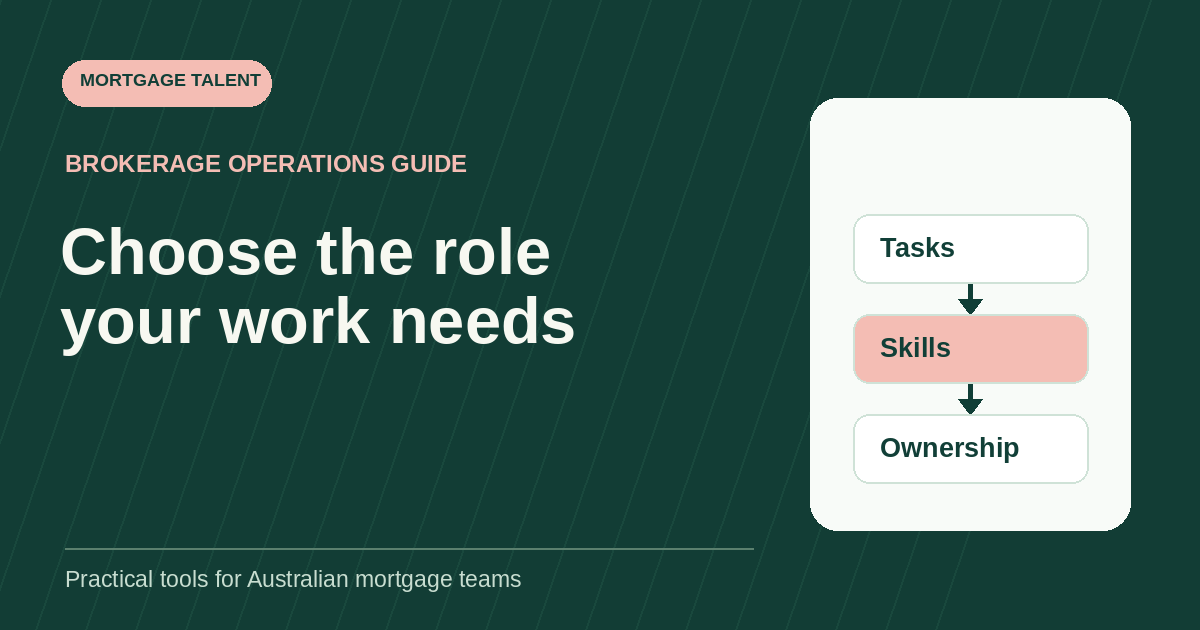
When a brokerage is busy, the first request is often for ‘an assistant’ or ‘a processor’. Those titles can describe different work in different firms. Start with the point where files slow down, then write a brief around the tasks that would remove that bottleneck.
Start with the work that is waiting
Use this comparison as a starting point, not a fixed industry definition:
Scroll sideways to see all columns →
| If the recurring problem is… | A role to scope first | Possible work to include |
|---|---|---|
| New enquiries, appointments and document requests are crowding the broker's day | Mortgage assistant | Coordinate meetings, maintain CRM records, request outstanding documents from an approved checklist and track follow-ups. |
| Broker-approved files are waiting for packaging, submission preparation or lender follow-up | Loan processor | Check application packs, enter factual details from source documents, track lender requests and flag inconsistencies. |
| Both stages are slow | Define the first hire around the larger bottleneck | Give one person a clear primary workflow and named handoffs, rather than an unlimited list of tasks. |
For example, a brokerage with plenty of enquiries but frequent gaps in income documents may need someone to manage the intake checklist. A brokerage with complete files waiting to be prepared for lender review may need stronger processing experience. The same person might cover parts of both workflows in a small team, but the job brief should still state which work comes first.
Write the handoff into the role
For each task, record its input, expected output, reviewer and escalation point. ‘Prepare a submission’ is vague. ‘Enter factual application details from the broker-approved file, compare them with source documents, then return inconsistencies to the broker before submission’ is easier to train and assess. Set out who may contact a customer or lender, what they can say, and who approves messages.
A job title does not settle what authority a person needs. ASIC describes suggesting or assisting with a particular credit contract as a form of credit activity. If your proposed duties may cross into that activity, check the actual task and the worker's authority with your licensee or compliance adviser before assigning it. ASIC also sets out training and supervision expectations for credit representatives. For mortgage brokers providing credit assistance, its best interests guide explains the applicable duty. These sources concern the activity and appointment, not a universal classification of assistant or processor titles.
Use different interview exercises
Give candidates fictional material rather than a real customer's file. Use the same exercise and scoring guide for everyone interviewing for a particular role.
Mortgage assistant exercise
Provide a sample enquiry, a meeting calendar and an incomplete document checklist. Ask the candidate to draft a short customer follow-up, update a mock CRM note and identify which questions belong with the broker. Look for clear writing, correct dates, orderly follow-through and sensible escalation.
Loan processor exercise
Provide a fictional broker-approved application summary, supporting document list and a mock lender request. Ask the candidate to identify mismatched facts, set out the next file steps and write a status update for the broker. Look for careful comparison with source information, attention to deadlines and a willingness to stop when evidence conflicts.
Score each response against a simple rubric: accuracy, completeness, communication and escalation. Ask the candidate to explain their reasoning as well as the final answer. Prior experience with a familiar system is useful, but a careful approach to an unfamiliar task can also show how the person will learn your workflow.
Choose using the first month of work
Before hiring, estimate how many hours are spent on enquiry coordination and how many on file preparation each week. Then choose three outputs the new person should own by the end of the first month. For an assistant, these might be an up-to-date enquiry queue, complete document requests and fewer missed follow-ups. For a processor, they might be complete packs for review, timely lender-request tracking and fewer avoidable data corrections. Treat these as management measures, not promises about a candidate's performance.
Compare candidate profiles against that brief, then use the same practical exercise in interviews. Our hiring process overview explains the path from role definition to selection. If you are planning a budget, the cost planner lets you compare your own assumptions; it is not a pay benchmark. Contact Mortgage Talent if you want to discuss the workload and handoffs before opening a role.
Take the next step
Explore Mortgage Talent or speak with our team about your hiring needs.