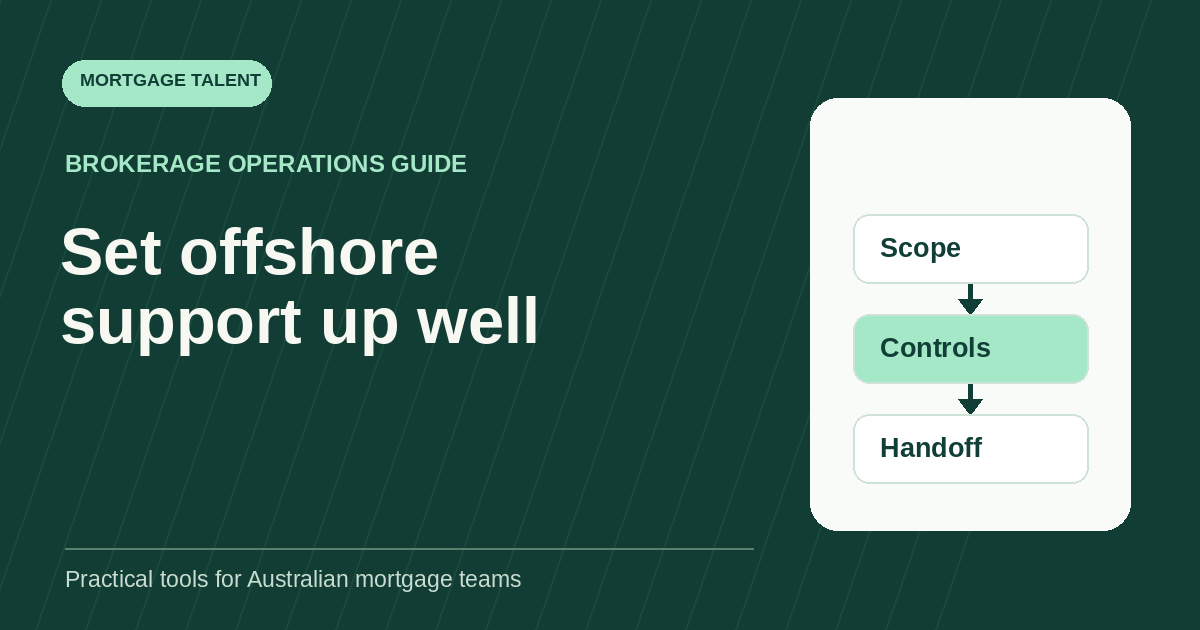
Offshore support can give a mortgage brokerage more room to handle repeatable file and coordination work. The useful first question is which tasks the person will perform, which customer information they need and who will check their work. Put those answers in writing before you recruit.
1. Define the work before choosing a title
Map a typical file from first contact to settlement. Which steps consume broker time? Which ones require judgement? A mortgage assistant might collect documents and track outstanding items, while a loan processor might prepare application data and follow lender requirements. Those labels are useful for hiring, but the actual tasks should define the role.
Give each task one of three owners:
- Support worker: prepares or checks information against an agreed checklist.
- Broker or authorised representative: reviews work and makes the relevant credit-assistance decision.
- Escalation contact: resolves an unclear instruction, missing evidence or customer concern before the file moves on.
Write down who approves customer-facing messages and lender submissions. Ask your licensee or compliance adviser to check the boundary when a proposed task could involve credit activities. ASIC's credit representative guidance explains training and supervision expectations for representatives who engage in those activities. ASIC's mortgage broker best interests guide describes the obligations that apply when brokers provide credit assistance.
2. Design access around the file
A mortgage file can contain identity, income and other personal information. List the systems the support worker needs, the records they may view or change, whether they can download files and when access ends. Use an individual account and an access level that matches the agreed tasks. Decide where working copies may be stored and how a customer document should be shared.
If your organisation is an Australian Privacy Principles (APP) entity, consider the privacy rules before giving an overseas contractor access. The OAIC says that providing personal information to an overseas contractor is a disclosure in most circumstances, so APP 8 will generally need to be considered; the precise arrangement and any exceptions matter. Its cross-border disclosure guidance explains the distinction between disclosure and an arrangement that remains under the entity's effective control. APP 11 requires reasonable steps to protect personal information an APP entity holds from misuse, loss and unauthorised access or disclosure (OAIC).
For the technical baseline, the Australian Cyber Security Centre recommends multi-factor authentication, software updates and backups as starting measures for small businesses (ACSC guide). Check those measures against your own systems and risks, and make account removal part of the exit process.
3. Interview against real work
Use the same fictional file exercise for each candidate, with no real customer data. Ask them to identify missing documents, draft a concise follow-up, enter a few details into a sample workflow and explain what they would escalate. Score accuracy, written communication, systems familiarity and willingness to ask when a request is unclear.
A short task exercise gives the hiring manager evidence that is closer to day-to-day work than a title alone. Compare the exercise with the person's experience and availability. Mortgage Talent's candidate profiles can help you narrow a shortlist before interview, while the hiring process overview shows how a role moves from brief to decision.
4. Set a review rhythm for the first month
Name the broker or team lead who will check early work. Agree on a small set of useful measures: missed items, rework, turnaround time and whether questions were escalated before a deadline. Review a sample of completed files together each week, record the correction and update the checklist when the same error recurs.
Where a broker provides credit assistance, ASIC notes that records made during the process can help capture the reasoning behind relevant decisions. Its RG 273 guidance discusses contemporaneous notes and an evidence-based summary. Keep the broker's decision record connected to the supporting file work, with a clear distinction between who prepared information and who decided.
A one-page brief to use before hiring
Before posting the role, write down:
- the recurring file tasks the person will own;
- the tasks they will prepare for review and those they must escalate;
- the systems and customer information they need;
- the broker or manager who will approve work and answer questions;
- the sample task you will use in interviews; and
- the first-month measures and review date.
Revisit the brief when volumes, lender requirements or customer-contact expectations change. See Mortgage Talent's trust and operating controls or contact us to discuss a role that matches your brokerage's workflow.
Take the next step
Explore Mortgage Talent or speak with our team about your hiring needs.