Before adding outsourced mortgage support, give the responsible licensee and your appropriately licensed insurance adviser a factual description of the proposed arrangement. A supplier's insurance certificate does not establish the answer for your brokerage. Identify the parties, actual duties, locations, supervision and contract before asking what needs to change.
The goal is a documented review of the proposed scope, including unanswered questions that must be resolved before work starts or expands. This guide helps prepare that review. It does not recommend an insurance product, set a sum insured, determine liability or tell you whether a claim would be paid.
Start with the brokerage's position
Does the brokerage hold its own Australian credit licence, or act as a credit representative under another licensee? Put that answer at the top of the fact pack. Identify the legal entity entering the supplier agreement, not just the brand appearing on the website.
If the brokerage operates under another licensee, involve that licensee's responsible contact early. Ask what information and approval process it requires for the proposed arrangement. Do not infer the answer from another broker's experience or from a provider saying that it already works with the same aggregator.
ASIC's RG 205 explains that outsourcing functions does not transfer the licensee's responsibility for its obligations. It also distinguishes outsourced functions from third parties undertaking credit activities. Have the licensee or legal owner assess the actual duties and status; an insurance review is not permission to perform a task.
Draw the parties and the work separately
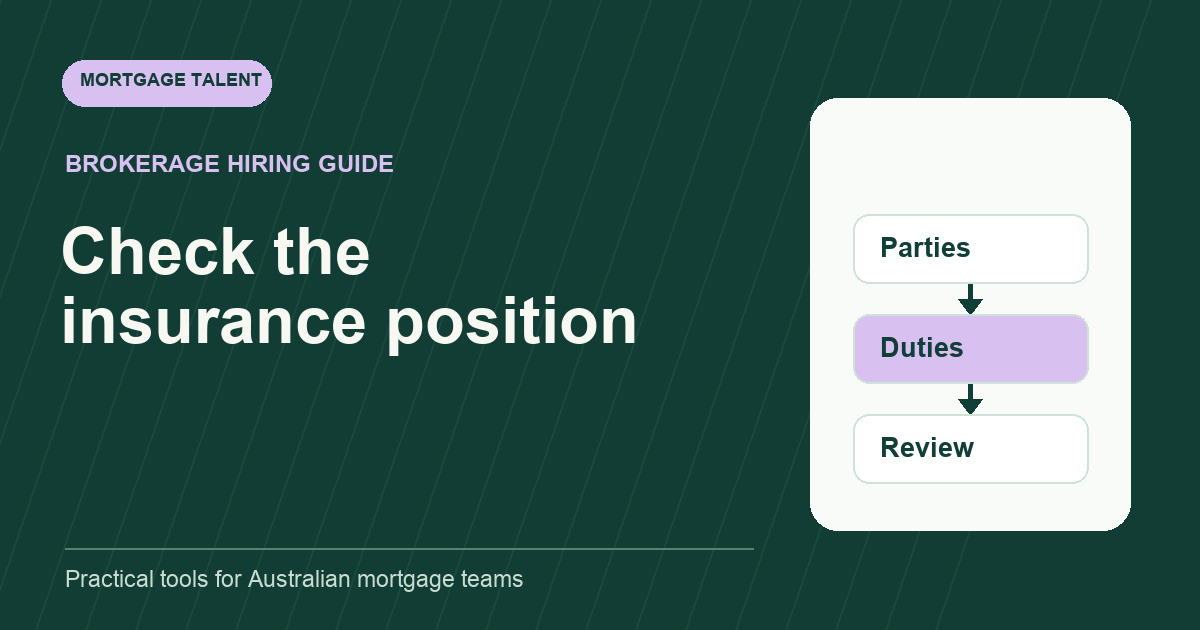
The following is an original fact-gathering diagram. Fill in actual entities and connect each activity to the person who performs it and the person who checks it. It is not a determination that every administrator is a representative.
Scroll sideways to see all columns →
| Party | Relationship to record | Work or decision to identify |
|---|---|---|
| Brokerage entity | Own licensee or representative relationship; proposed customer of the supplier. | Who defines the work, contracts for it and accepts its output? |
| Responsible licensee | Same entity as the brokerage, or a separate named organisation. | Who reviews authority, supervision and the relevant insurance arrangements? |
| Service provider | Contracting entity, any employing entity and proposed subcontractors. | Who supplies staff, controls substitutions and makes contractual commitments? |
| Individual worker | Employer or engagement route, working location and allocated duties. | What does the worker actually enter, prepare, communicate or decide? |
| Broker or supervisor | Named receiving role, including backup. | What is checked before customer communication or lender submission? |
For example, distinguish “copies supplied information into a draft for broker checking” from “changes the customer's declared information” or “recommends a product”. A title such as processor does not convey those boundaries. Attach the proposed task list, including excluded activities and the route for questions outside scope.
The support-duty and authority guide helps prepare that separate discussion. Do not use an insurance conversation to bypass it.
Prepare one fact pack for the review
Make the operations manager responsible for assembling the pack. Ask each source owner to confirm their section, then send the agreed version to the appropriate adviser and licensee contact through approved channels.
- Entities and engagement: actual legal names, who contracts with whom, who employs or engages the worker and any proposed subcontracting.
- Activities: the task list and exclusions, customer-facing contact, systems used and what happens when the worker sees inconsistent information.
- Locations: where the work is performed and any planned location changes, rather than simply describing the team as remote.
- Supervision: the checking process, acceptance owner, access controls and fallback when the broker is unavailable.
- Proposed contract: service scope, relevant indemnity wording and other terms the legal or insurance adviser needs to consider.
- Insurance documents: the current documents requested by the adviser, clearly labelled by insured entity and period; a provider certificate is one input, not the completed review.
- Business changes: intended start, expected work pattern and any known change to activities or scale that may affect the assessment.
Keep client identities and loan documents out of a general scoping email. Describe the process using fictional examples. If an adviser needs specific records, establish the appropriate access and information-sharing route rather than circulating a live file to everyone in the chain.
Separate three questions that sound alike
ASIC's RG 210 identifies the amount, scope and terms of cover as relevant to adequacy. It discusses licensee and representative cover and a particular separate-policy and indemnity arrangement. These principles do not establish that a provider's policy protects your brokerage or that every offshore arrangement needs a separate policy.
Use three headings in your review request:
- The brokerage or licensee position: what arrangements are relevant to the disclosed activities and parties, and what remains to be confirmed?
- The supplier's position: what do its documents establish about its own arrangements, and what additional information does your adviser need?
- The contractual position: what does the proposed indemnity allocate, and does the adviser or legal owner identify a mismatch with the intended insurance arrangements?
Ask the adviser to identify which proposed activities and locations have been considered, which relevant exclusions or conditions need attention, and whether the limits and retained exposures have been assessed for this arrangement. Ask what information is still missing and whether any policy change must be completed before starting. A response should distinguish confirmed document findings from assumptions about a future claim. If a provider can substitute workers or add subcontractors, ask how that change should be referred for review.
A contract promise and an insurance response are different questions. Ask for the reviewer's explanation of the actual documents, including uncertainties, rather than treating the word “insured” as a complete answer. Do not sign an indemnity on the assumption that a policy will fund it.
The linked ASIC RG 210 guide is dated March 2010. This article does not treat its older references or figures as freshly updated insurance-market information. Ask your adviser to check the current applicable position and policy documents.
Two fictional arrangements, the same entry error
Illustrative error: a support worker copies an income figure into the wrong field in a draft application, and the error is discovered after the normal checking step. No customer loss, liability finding or insurance outcome is assumed.
Arrangement A: a brokerage with its own licence
The brokerage contracts with a support provider. Its broker reviews the prepared application. The fact pack should show the contracting parties, worker location, exact entry task and checking process.
Ask the adviser which documents and policy provisions are relevant to that disclosed sequence. Ask the licensee's responsible owner whether the described duties and supervision match the approved arrangement. Do not conclude that the supplier is solely responsible because its worker made the entry, or that the brokerage's policy necessarily responds because its broker checked it.
Arrangement B: a credit representative using supplier staff
The brokerage operates under a separate licensee and proposes the same task. Add that licensee relationship and its applicable approval process to the pack. Confirm which entity is contracting for the service and who has received the proposed scope.
Ask the licensee contact and insurance adviser how they want the arrangement reviewed and which unanswered questions must be resolved. The identical entry error does not prove the arrangements have identical coverage. A general assurance from the supplier or another representative is not a substitute for the actual review.
Record the answer and the next change trigger
Keep the pack version, reviewer, date, documents considered, conditions and unresolved items together. The responsible owner should record whether the proposed scope can proceed, needs revision or remains on hold. Do not record “approved” when the answer was only a request for more information.
RG 210 expects review at least annually and after major business changes. In your operating record, also flag proposed changes in duties, entities, locations or subcontracting for the responsible owner to assess before expanding the arrangement.
The provider due-diligence checklist addresses the wider operational checks. Once the role boundaries and review conditions are understood, share the support scope you want to fill, including any restrictions the hiring or provider discussion must respect.
Take the next step
Explore Mortgage Talent or speak with our team about your hiring needs.