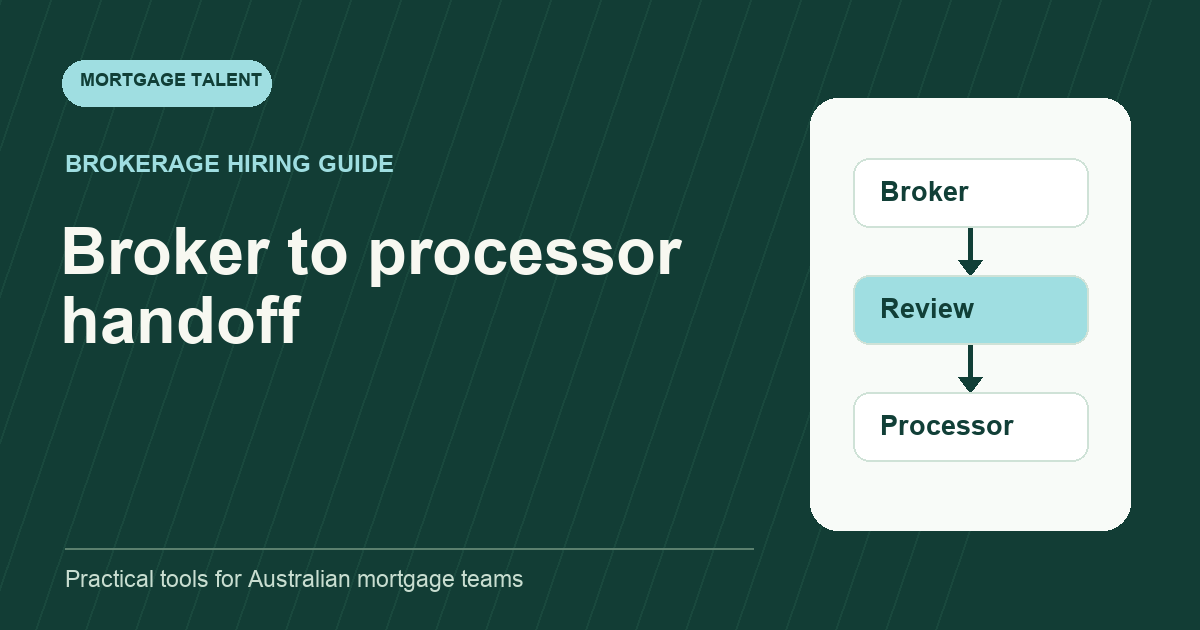
A broker-to-processor file handoff should let a loan processor begin the agreed factual work without guessing what the broker has decided. It should also show where the file must stop for review. A short template is more useful than a long instruction that nobody updates: it names the next action, evidence, owner, deadline and escalation route. Use this framework for broker-approved mortgage files, then adapt it to your lender, aggregator, licensee and systems.
Mark the point at which a file is ready for processing
Start with a clear intake state. “Application received” may mean the customer's form arrived, but it does not mean a complete pack or an approved recommendation exists. Define the entry point your team needs, such as “broker has reviewed the customer information, selected the work to be prepared and approved the processor to check source documents and populate factual fields.” This is an operational example, not a rule for every brokerage.
If a document is missing at entry, note it explicitly. If the broker has not yet made a decision, keep the file in a pending-broker state rather than using a processor to infer the answer. A processor can prepare an issue list, but an issue list is not a credit recommendation. ASIC's credit activity guidance explains when suggesting or assisting with a particular credit contract can be credit assistance. Ask your licensee or compliance adviser to check the actual duties and authority assigned to each person.
Copy this handoff into your file workflow
Use fields in your existing CRM or file system rather than a parallel spreadsheet containing customer documents. Keep the record short enough to complete on every handoff:
Scroll sideways to see all columns →
| Handoff field | What the broker records |
|---|---|
| File reference and stage | Internal file ID, current stage and the date of handoff; avoid using a customer name in a general team queue. |
| Approved work | The factual preparation or checking the processor may perform now, with any excluded tasks. |
| Evidence location | Links to approved source documents inside controlled systems, with a note about versions or missing items. |
| Known exceptions | Open questions, conflicting figures or documents that need broker or customer clarification. |
| Contact authority | Who may contact the customer or lender, for what purpose, using which approved channel and message process. |
| Expected output | The pack, issue list or CRM update the processor returns, including how to mark unverified details. |
| Reviewer and due time | The named broker or authorised reviewer, review slot and escalation contact if the deadline is at risk. |
Attach a version or timestamp to the broker's instructions. If a lender policy or customer fact changes, the processor needs to know which instruction is current. Keep the source of each factual entry traceable to the relevant document or broker-approved note. This makes corrections easier and helps a replacement team member understand the state of the file.
Show the stop points, not just the tasks
The handoff should say what the processor does when an instruction is missing. A simple three-state loop works: ready for processing, blocked for clarification, and ready for broker review. When blocked, the processor records the exact question, the document or field involved and who must answer it. They do not silently choose between conflicting income figures or rewrite the broker's recommendation.
At the review point, return a concise change summary: what was entered, what was checked against source material, what remains unverified and what customer or lender response is pending. The broker then decides whether to approve the next action, request a correction or pause. ASIC's RG 273 explains the mortgage broker best interests obligations and expects records that show how the broker acted when providing credit assistance. The handoff record should support, rather than replace, the broker's own decision record.
Try a fictional file before using live customer information
Consider a fictional case labelled File A. The broker assigns the processor to compare a broker-approved application summary with documents already collected. The processor finds that one income amount in the summary differs from a source statement and that an identification document is missing. The correct output is an issue note identifying both items, where they were found and the question for the broker. The processor should leave the affected fields unverified and should not send the pack merely because a due date is close.
The broker reviews the issue, decides what further information is needed and records the instruction. Only then does the processor update the pack and return it for the next approval point. This example can also be used as a training exercise: ask a new hire to identify the discrepancies, write the issue note and explain when they would stop. Our loan processor role page describes the broader position; the handoff template is the operating control once that role is in place.
Accept the output against a defined checklist
Before marking a pack complete, the reviewer checks that each required document is present or clearly marked missing, factual fields match their cited sources, open questions remain visible, customer-facing messages follow the approved route and the next owner is named. Record the outcome as accepted, returned for correction or held pending evidence. Avoid marking a file “done” merely because the processor has finished their allocated hours.
Track a few measures monthly: first-pass acceptance, recurring error types, time spent blocked for broker answers, and late handoffs. Separate processor errors from incomplete intake and changed instructions. If the same issue keeps recurring, fix the template or upstream checklist. This is an operational improvement measure, not a score for judging a worker without context.
Keep access aligned with the file stage
Give each worker an individual account and access only to the systems and files required for their current tasks. If a file is transferred, confirm who can see working copies and where they are stored. The OAIC's APP 11 guidance explains that an Australian Privacy Principles entity must take reasonable steps to protect information it holds, with measures suited to its circumstances. Its APP 8 guidance addresses overseas access and contractor arrangements where applicable. Check those obligations for your arrangement rather than assuming a shared folder is enough.
Review the handoff template after a month of use. Remove fields nobody needs, add the recurring exceptions, and make sure the named reviewer can keep up with the queue. For the earlier decision about whether to hire an assistant or processor, see our role comparison. Our trust and operating controls give further context for access and accountability as you plan support.
Take the next step
Explore Mortgage Talent or speak with our team about your hiring needs.