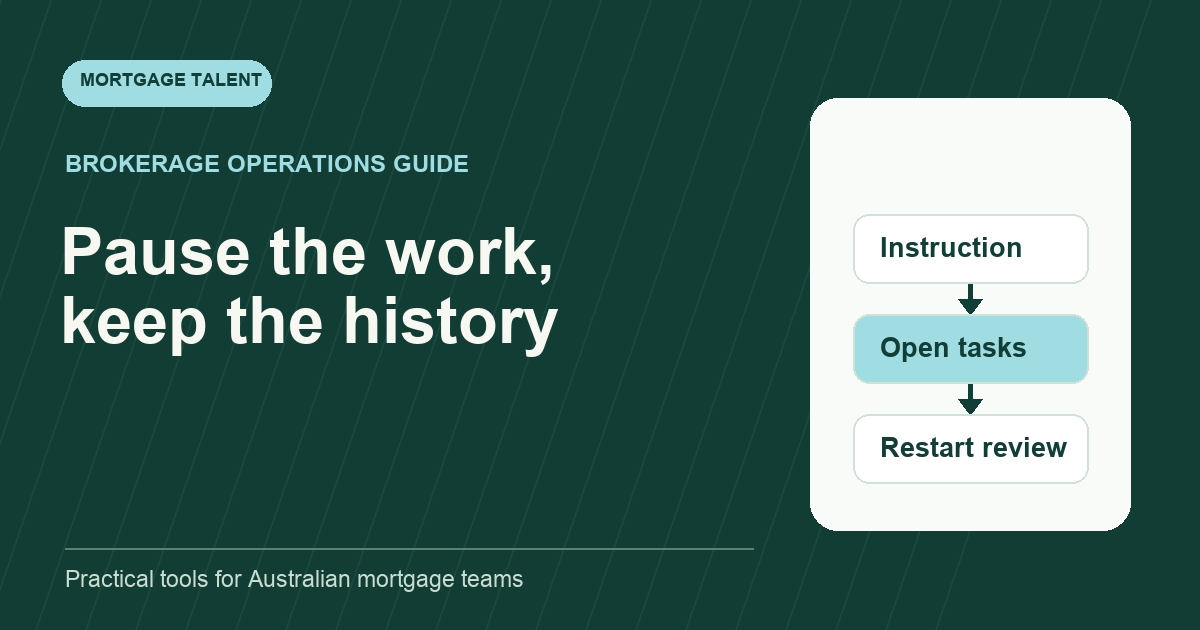
When a mortgage file pauses or is withdrawn, record the broker's actual instruction, reconcile every open support task and distinguish the internal work state from any confirmed external application outcome. A status change in your CRM should not be treated as proof that a lender request was withdrawn.
This is a proposed operational method for Australian brokerage support teams. It does not explain how to cancel a loan, determine a customer's obligations or set record-retention periods. Use the responsible broker's directions and your organisation's approved records process for the actual case.
Choose a status that says what happened
Scroll sideways to see all columns →
| State | Meaning for support work | Separate evidence needed |
|---|---|---|
| Awaiting a decision | Work cannot proceed until the named owner responds | Question, owner and next check |
| Paused by broker instruction | Specified preparation or contact work is held | Instruction, scope and review point |
| Withdrawal action assigned | The authorised person has a recorded action to perform | Actual external outcome remains unresolved |
| External withdrawal confirmed | The relevant confirmation is recorded | Source, reference and confirmation time |
| Restart under review | The broker is deciding what new work may begin | Current inputs and explicit next instruction |
These labels are internal suggestions, not lender statuses. Preserve the actual status shown by the lender or other approved source in a separate field. A customer saying they may wait is not automatically an instruction to withdraw an external application.
Record who instructed the pause and its boundaries
Capture the instruction source, date, affected work and responsible broker. Identify whether document follow-ups, prepared messages, review tasks or external requests should continue. Avoid a broad “on hold” tick that leaves the assistant guessing which activities have stopped.
If the instruction comes through a customer message, record it accurately and return it to the broker for the next action. Do not infer contractual or lender consequences. The worker can prepare a factual handoff describing the request and existing open tasks.
Use the approved communication route to tell affected internal owners what has changed. Keep sensitive case detail inside the controlled file. The shared queue needs enough information to prevent work starting incorrectly, without becoming a second customer record.
Reconcile the open tasks before removing the file from view
- List accepted work, unanswered questions and scheduled contacts.
- Assign each item a broker-directed next state.
- Check prepared messages and reminders that could still be sent.
- Identify any external action awaiting confirmation.
- Name the person who will review the file again, if applicable.
A paused file should remain findable with its unresolved work. Do not close every task merely to reduce the active count. Some tasks may be held; others may be cancelled by an authorised instruction; an external request may still need follow-through.
The work-in-progress method helps distinguish active preparation from waiting work. Apply the definitions consistently so a pause releases a start slot only under your agreed queue rules, rather than concealing unfinished tasks.
Confirm an external action separately
Where the broker assigns a withdrawal or another external action, record the authorised owner and the expected evidence of its outcome. Keep the request reference and any reply linked to the file. The support worker should not substitute a sent email for confirmed processing.
If the external reply is ambiguous, route it back to the broker. Avoid copying the internal status into the external status field to make them appear reconciled. Those records can differ legitimately while an action is pending, provided the next owner and question remain clear.
After confirmation, reconcile reminders, outstanding preparation and any follow-ups the broker wants retained. Preserve the history under your approved records process. Closing the operational queue does not itself authorise deletion of documents.
Test a fictional pause followed by a restart
Illustrative example: a mock customer asks to wait while their plans change. The broker instructs support to pause a prepared pack and routine follow-ups, while retaining one external clarification task. The assistant records that specific scope rather than closing the whole file.
Two weeks later in the fictional exercise, the customer asks to resume. The assistant creates a restart-review task with the earlier instruction, current customer report and previous open clarification. They do not reactivate every old reminder automatically.
The broker identifies which information needs refreshing and which preparation can restart. The worker records the new tasks, owners and review points. An earlier reviewed pack remains historical until the responsible reviewer decides what can be reused. This is a constructed workflow example, not a lender's restart policy.
Use a restart checklist that requires current instructions
Check that the requesting person, responsible broker, current scope, approved inputs and next review point are recorded. Reconcile any new file or application reference with the old one so two workers do not chase the same request from different queues.
Also check who communicates the next step to the customer. An internal restart label should not trigger an unreviewed promise that the application can proceed on unchanged terms. The broker should approve any outcome-related wording.
The post-settlement workflow handles a different outcome: a confirmed settlement and subsequent client care. Keep that sequence separate from the pause or withdrawal method so unfinished and settled files are not closed for the same reason.
Make file coordination part of the support brief
Describe duties through observable actions: reconcile open tasks, preserve instructions, distinguish request from confirmation and prepare a current restart handoff. Test them with a fictional file that contains a queued reminder and an unresolved external reply.
Explore assistant support and discuss open-file coordination. Bring your status definitions and broker review arrangement so the role can keep waiting work visible without deciding external outcomes.
Take the next step
Explore Mortgage Talent or speak with our team about your hiring needs.