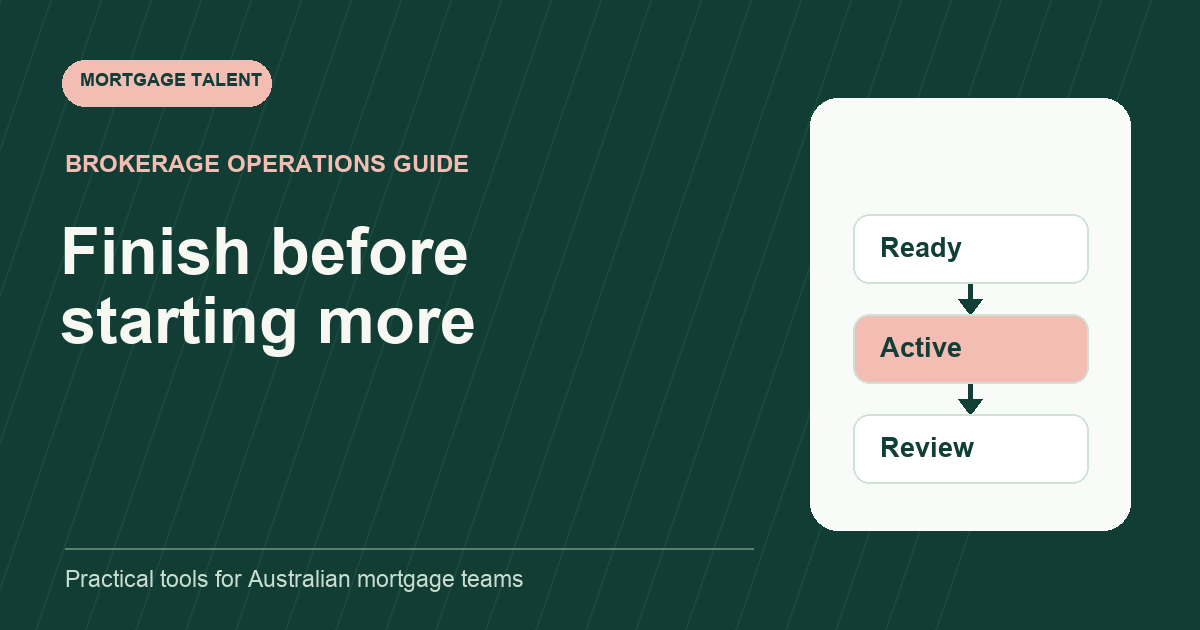
A mortgage processing work-in-progress limit is a team rule for how much preparation work can be started at once. Define what counts as active, keep blocked cases visible, and allow a new task to start when capacity for preparation and review is available. Test the limit using your own completion evidence rather than a generic files-per-person target.
For an Australian brokerage, the rule should govern the stage your team controls, such as application-pack preparation. It cannot set a lender's assessment time or make an external response arrive sooner. If the queue is already overloaded, use the backlog recovery plan alongside the start rule.
Define the stage and the unit before choosing a number
Choose one stage with a clear entry and exit. For example, a task enters active preparation when its approved inputs are ready and a worker begins; it exits when the prepared pack is accepted at the agreed review point. If review is a separate stage, give it its own visible queue and owner.
Do not count every live loan as active preparation. A settled file, a borrower document request and a prepared pack awaiting review represent different work. Record the next owned action even when a file is waiting. A local limit is useful only if everyone counts the same thing.
Choose tasks rather than whole files where cases vary substantially. If one file has several tasks, preserve the file identifier so the team can see related work. Explain whether paired training tasks count in the same limit and how reviewer availability affects them.
Keep ready, active, review and blocked states distinct
Scroll sideways to see all columns →
| State | Meaning | Required next action |
|---|---|---|
| Ready | Approved inputs are available; work has not started. | Allocate when a suitable preparation and review slot exists. |
| Active | A worker is preparing the scoped output. | Complete or record the reason it cannot proceed. |
| Awaiting review | Preparation is complete; acceptance is pending. | Named reviewer responds at the agreed check point. |
| Blocked | A specified dependency prevents the next step. | Owner, unblock request and next check date remain visible. |
| Accepted | The defined stage output has passed its review. | Hand over the next action to its owner. |
Moving a task to blocked should not remove responsibility for it. Record whether blocked tasks consume active slots under your chosen rule. If they do not, monitor the combined active and blocked load so apparent capacity does not conceal a growing follow-up burden.
Choose a trial limit from observed effort
Review a recent period of comparable tasks. How many were genuinely being prepared at once? How much finished work waited for review? Which starts occurred without complete instructions? Use the capacity forecast to understand the next period's demand and available hours.
Start with a modest trial that your team can explain and monitor. Record the proposed limit, stage definition, trial dates and manager responsible. The number is a local experiment, not a benchmark. If your work mix changes, repeat the reasoning rather than treating the original number as permanent.
Count accepted outputs as well as starts. A rule that reduces active work but leaves the review queue growing has moved the constraint. Check the broker review workflow before increasing the preparation limit.
Use a fictional queue to test the rule
Imagine a small team agrees to trial three active preparation tasks across one defined stage. Two tasks are being worked on and one has reached review. A fourth is ready. A fifth is waiting for a broker clarification and is recorded as blocked. These counts are illustrative, not recommended staffing ratios.
If the local rule includes work awaiting review, the fourth task does not start yet. The team asks the reviewer to resolve the pending output or works on the clarification. If the rule excludes review, the fourth may start only if its future review can be accommodated. Write this choice down; otherwise the same board will be read differently by different people.
The blocked task still has an owner and check time. If the clarification returns, the manager decides whether it re-enters the active stage before another start. This prevents all newly unblocked cases from becoming active simultaneously without an allocation decision.
Create an urgent-work exception with a visible trade-off
Define who can approve an exception and what evidence is needed for urgency. A verified external date, broker instruction or specific customer issue may justify reordering work. Record the task displaced, who will be told and when the normal limit will resume.
Avoid giving every stakeholder an untracked fast lane. If exceptions become routine, review the normal rule, staffing mix or scoping process. The exception record should help the team learn why the plan changed, not become a separate queue that nobody counts.
Communicate factual status and the next check point when work is rescheduled. Do not turn the internal limit into a promise about lender approval or settlement. Keep external milestones tied to confirmed information from the responsible parties.
What should workers do when the start limit is reached?
Make the next useful actions explicit: complete active preparation, resolve a recorded question, prepare a review handoff or perform planned training. The rule should not leave people guessing or encourage them to start work secretly outside the board. If no useful action is available, the manager should investigate the constraint. Record that idle capacity separately from accepted output so the review of the trial reflects both flow and utilisation.
Decide whether to retain, change or stop the trial
At the end of the trial, compare accepted outputs, preparation age, review waiting, blocked load and avoidable restarts with your starting observations. Explain any changes in task mix, staff availability or reviewer time. A small local sample can inform a decision without establishing a universal productivity effect.
If a recurring preparation gap remains, explore processor hiring and the talent marketplace. Discuss the stage that needs capacity with your trial evidence and review constraints, so additional support has a defined place in the workflow.
Take the next step
Explore Mortgage Talent or speak with our team about your hiring needs.