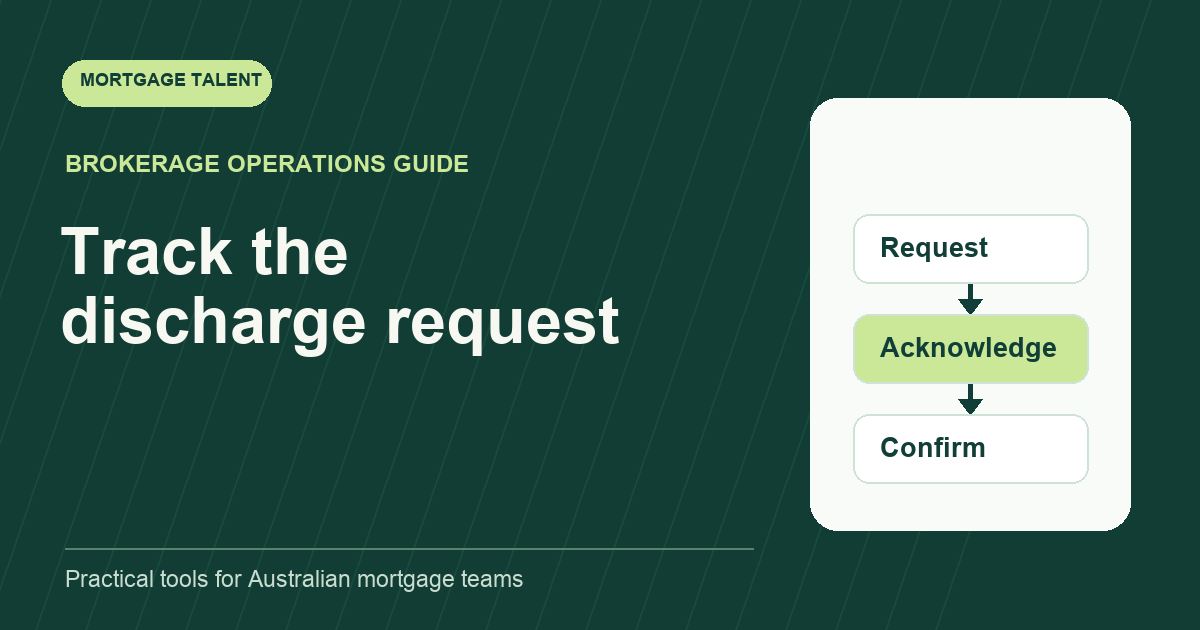
Mortgage support staff can coordinate refinance discharge administration by tracking the current lender's instructions, the request owner, lodgement evidence, acknowledgement and unresolved next actions. Keep requested, received and confirmed milestones separate. Sending a discharge form does not establish that a refinance settlement has been completed.
The method below is an administrative tracker for Australian brokerages. The broker and relevant lenders or settlement professionals remain responsible for their decisions and confirmations. Pair it with the settlement coordination checklist to see how this dependency connects with the wider file.
Verify the current lender's request process
Start with the actual outgoing lender's current instructions and the broker's approved case directions. Record where those instructions were checked and when. Confirm who prepares the request, who supplies any required authority and who can send it through the approved route.
NAB's refinance settlement guide describes a possible discharge authority request and says lenders have their own discharge processes. Use that as a reason to check the particular lender, rather than treating one lender's form or timing as universal.
Ask the broker to resolve unclear scope before an assistant sends a request. Record verified reference details in the approved file record. Do not infer which facilities or security arrangements a request should cover from a shorthand message or an old example.
Use a request-to-confirmation register
Scroll sideways to see all columns →
| Checkpoint | Evidence to record | Owner of next action |
|---|---|---|
| Instructions checked | Current lender source and approved broker directions. | Broker or designated coordinator. |
| Request prepared | Preparation record and unresolved questions. | Person responsible for review or authority. |
| Request sent | Approved route, date and receipt reference if supplied. | Coordinator checking acknowledgement. |
| Acknowledgement received | What the lender acknowledged and any missing items. | Named person resolving the outstanding item. |
| Timing queried | Question, factual reply and next check point. | Broker or coordinator following up. |
| Milestone confirmed | Confirmation from the responsible party. | Next workflow owner. |
These are proposed coordination checkpoints, not a mandatory lender sequence. Adapt the register to the actual process. Keep sensitive loan details in approved systems and use the tracker only for the context necessary to coordinate the work.
Distinguish acknowledgement from readiness
A receipt may establish that a request arrived. It may not establish that all information was accepted, that no questions remain or that a proposed settlement date is confirmed. Quote the relevant factual status in your internal note and record its source.
For example, “request received; lender asks for clarification; broker response pending” is clearer than “discharge done”. If an acknowledgement contains conditions or unanswered questions, give each one an owner. Keep the status open until the responsible party supplies the confirmation needed for the next stage.
Use the lender follow-up log for enquiries. Link it to the same file and avoid parallel notes that disagree about the latest response. The worker should be able to identify the next action without searching several message threads.
Test a fictional missing-acknowledgement scenario
Imagine an assistant records that a fictional request was sent on Monday. By the team's next check point there is no acknowledgement. A separate message mentions a proposed settlement date, but no responsible party has confirmed readiness. This is an illustrative administrative scenario; no turnaround time is being suggested.
The assistant checks the recorded route and receipt information, then prepares a factual enquiry through the approved process. The broker is informed that the dependency remains unresolved. The status stays “sent, acknowledgement not confirmed”, and the next check receives a named owner.
If the reply says additional information is needed, the coordinator assigns that action rather than continuing to chase for a date. If the reply changes the timing, the broker determines what must be communicated or rearranged. A sequence of repeated follow-ups is not a substitute for identifying the actual unresolved requirement.
Prepare factual updates for the broker and customer
An internal update should state the last verified event, the open issue, who will act and when the next check is planned. Keep intended dates distinguishable from confirmed dates. Do not say a transfer, discharge or settlement is complete unless the responsible party has confirmed the relevant event.
Use the brokerage's review process for customer messages. A draft might say “The discharge request has been acknowledged. An additional item remains open, and your broker is reviewing the next step. We will update you after the next confirmation.” Adapt the wording to the actual evidence; it is a fictional message pattern.
Raise conflicting references or unexpected instructions with the broker. Support staff should not resolve substantive loan or security questions by choosing whichever message looks most recent without verification.
What if two people have already sent enquiries?
Choose one coordinator for the next action and reconcile the existing responses in the approved file record. Tell the other team member which question remains open so they do not send another duplicate request. Preserve both factual replies if they differ and ask the broker to resolve the discrepancy. A clear owner of the next check is more useful than deleting the history or choosing a reply solely because it arrived later.
Close the coordination task and plan ongoing care
When the relevant milestone is confirmed, record its source, date and next owner. Check the register for unclosed actions so an old reminder does not trigger an unnecessary request later. Carry any remaining customer questions into the post-settlement care workflow.
If discharge coordination repeatedly consumes broker time, define the factual tracking and follow-up work in an assistant brief or processor brief. Compare experience through the talent marketplace and discuss the coordination capacity you need with the authority and review points already made clear.
Take the next step
Explore Mortgage Talent or speak with our team about your hiring needs.